
Tools & Models · OpenRouter · Setup Guide
The Marketer's Guide to OpenRouter: One Account, Every AI Model, No Lock-In
One account, every AI model, no lock-in. How OpenRouter works, what it costs, how open models compare, and how presets keep your exit open.
Nearly two-thirds of the AI work running through OpenRouter last week went to open models. The count for the week of October 12 was 31.3 trillion tokens on open models against 17 trillion on closed ones. That's OpenRouter's own usage chart, and it measures volume, not quality. Most of that traffic is developers and agents.
The developers and agent builders on OpenRouter have already dropped the one-vendor habit. Too many marketers I talk to haven't. They pay one company's top-model price for every caption, summary and first draft, often because that's the model the subscription opened to on day one.
That gap doesn't show up on a $20 plan. It shows up the day you scale: agents, bulk content, enrichment, reporting. If your competitor runs 1,000 first drafts for about a dollar and you run them for eleven, you're cooked, and you won't see it coming.
This guide shows you how to get every model through one account, what the price gap really looks like, and how to keep your exit open so no single vendor owns your workflows.
You're overpaying for AI: fix this
Alec on why you may be overpaying for AI.
Already sold? Skip to the setup card →
Rather follow along here first? Work through the guide and grab the one-page setup card when you're ready to keep it open next to OpenRouter.
At a glance
One account, 500+ models.
OpenRouter puts Claude, GPT, Gemini and the open models behind one login and one API key.
No markup.
You pay the provider's list price, plus a 5.5% fee when you buy credits on the standard plan.
The gap is between tiers.
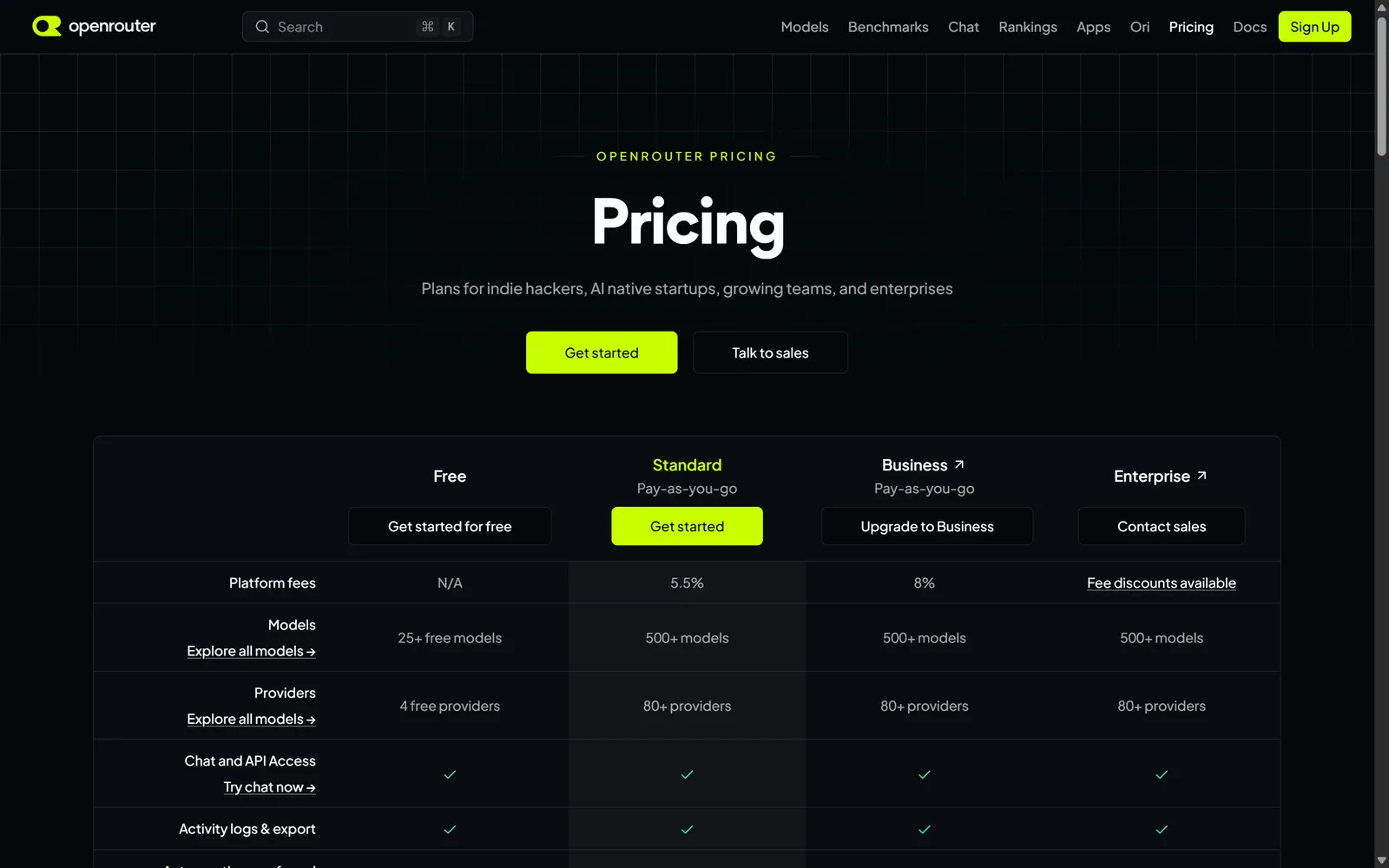
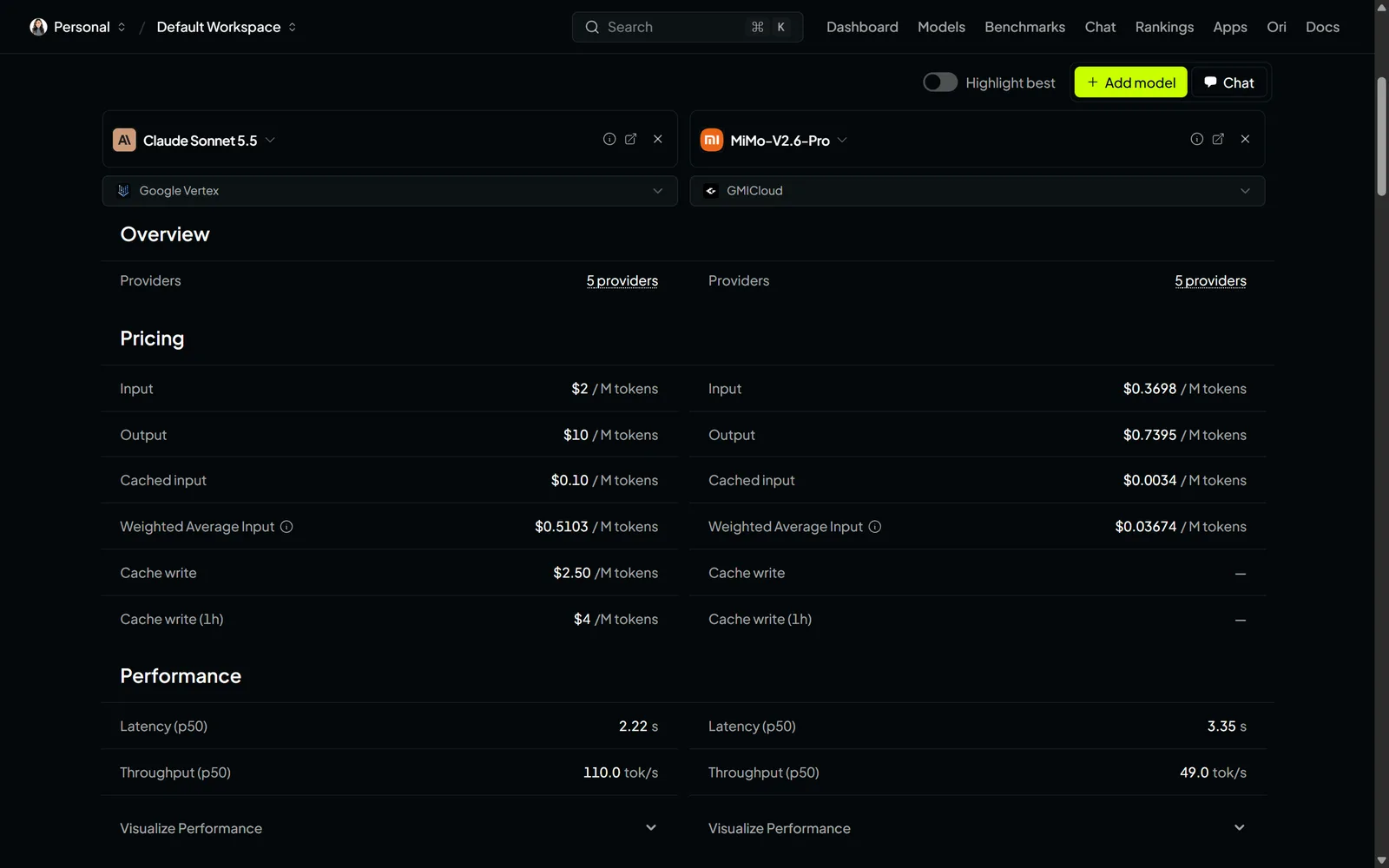
On a typical task, MiMo-V2.6-Pro costs about a tenth of Claude Sonnet 5.5 and DeepSeek V4.1 Flash about an eighth. Claude's and OpenAI's own budget models are cheaper still.
Open is close on quality.
MiMo-V2.6-Pro, an open model, is statistically tied with Sonnet 5.5 on Text Arena (formerly LMArena). Open models still trail the frontier on hard reasoning.
Presets are your exit door.
Point your tools at a preset, then swap the model underneath it without touching a single app.
A lot changed since February.
Search, the Auto Router, credit expiry and the free models all moved. Details below.
What OpenRouter is
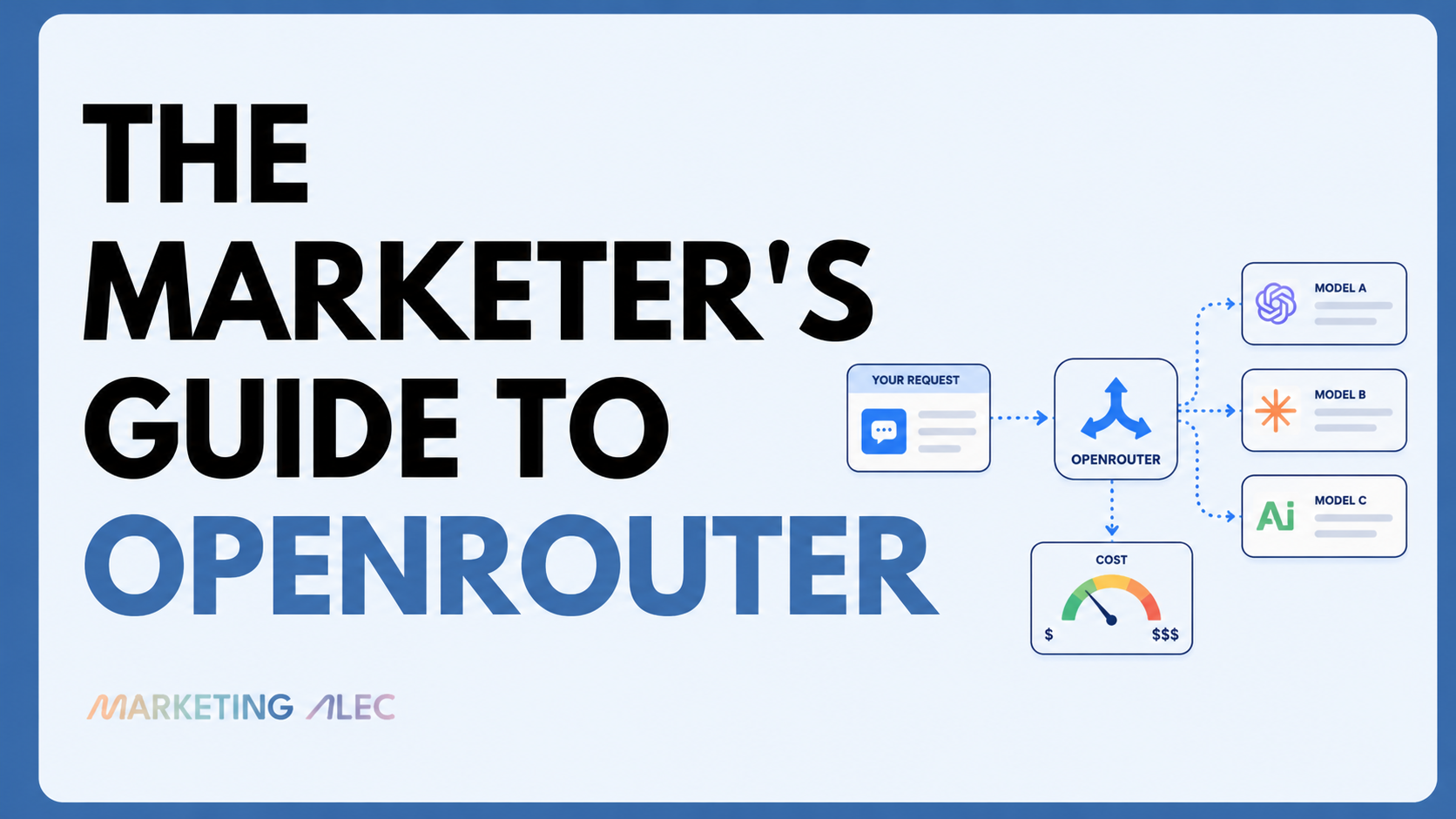
Think of it as one plug for every AI model. You create one account, add credits, and pick from 500+ models across 80+ providers. Switching from Claude to DeepSeek is a dropdown, not a new contract.
The pricing is simple. “Inference is billed at the provider's list price on every plan.” On the standard plan, the fee is 5.5% ($0.80 minimum) when you buy credits. There's also a new self-serve Business plan at 8% with team controls.
One note on independence: in August OpenRouter announced it's joining Stripe, and said it expects the deal to close in the coming weeks. A router is only an exit if it stays neutral, so keep an eye on that.
The real price gap
So the lock-in that costs you isn't Claude versus open source. It's sending every task to the most expensive model because it's the default.
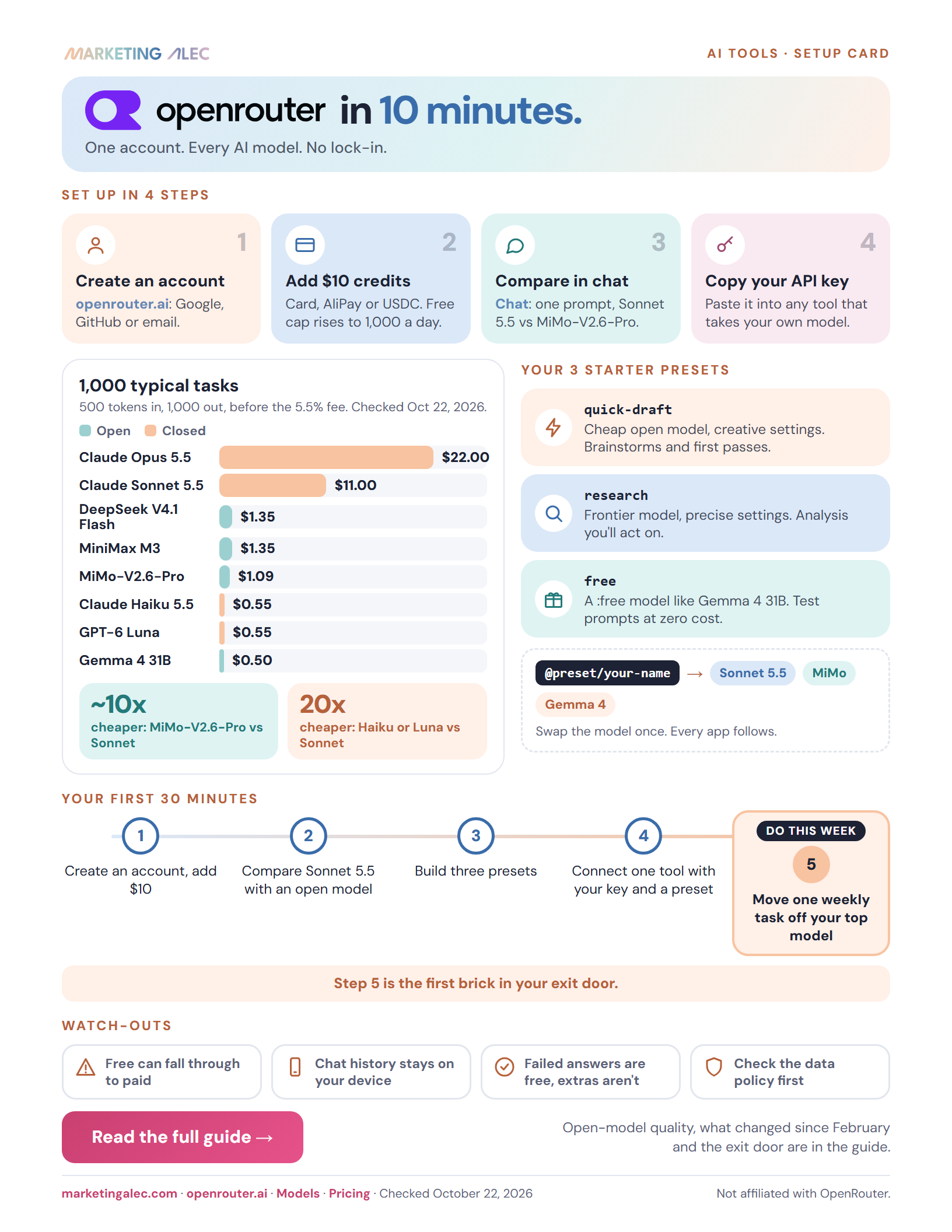
The setup card puts eight models side by side, open and closed, for 1,000 typical tasks. Prices move every month, so check the live rate on openrouter.ai/models before you build a workflow on it.
Is open good enough?
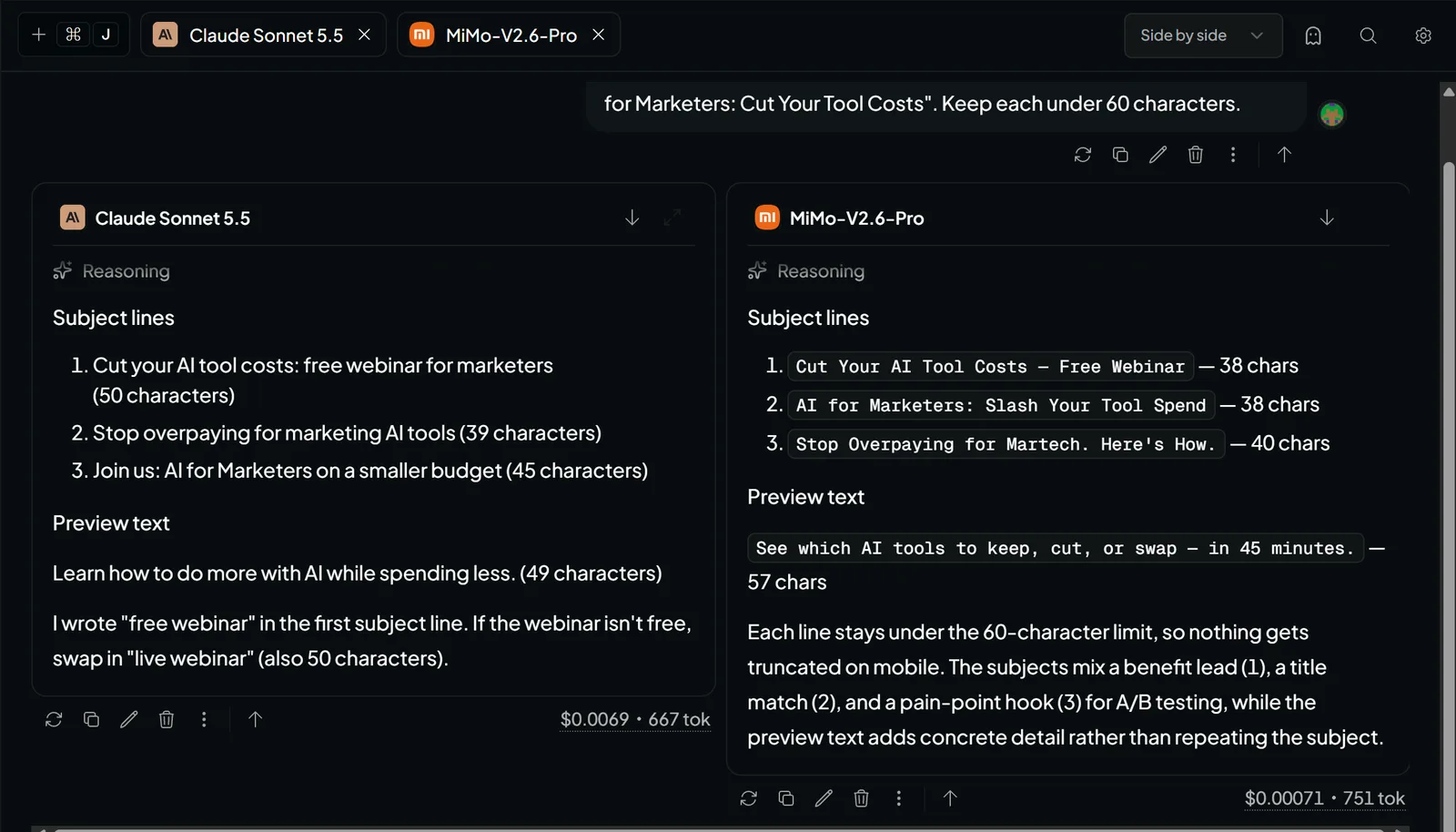
Here is the same prompt sent to both models in OpenRouter's chat, with the cost of each answer underneath.
For everyday marketing work, yes. On Text Arena's human-preference leaderboard (formerly LMArena), MiMo-V2.6-Pro scores 1480±9 and Claude Sonnet 5.5 scores 1477±7. That's a statistical tie.
On hard reasoning, the frontier still wins. Artificial Analysis scores Claude Opus 5.5 at 58 and the best open model at 46.
How I split the work
Open or budget models get brainstorms, first drafts, captions, summaries, reformatting and data cleanup. Frontier models get strategy, final edits and anything a client or your CEO reads word for word.
My operations agent falls back to an OpenRouter preset, so when one provider has a bad day, the work keeps moving. If you want the full routing playbook, it's in my AI model routing guide.
Set it up in 10 minutes
Setup takes about ten minutes. The four steps, the three starter presets and a checklist for your first 30 minutes are on the setup card, next to the eight-model price table.
Build your exit door
This is how you keep your exit open.
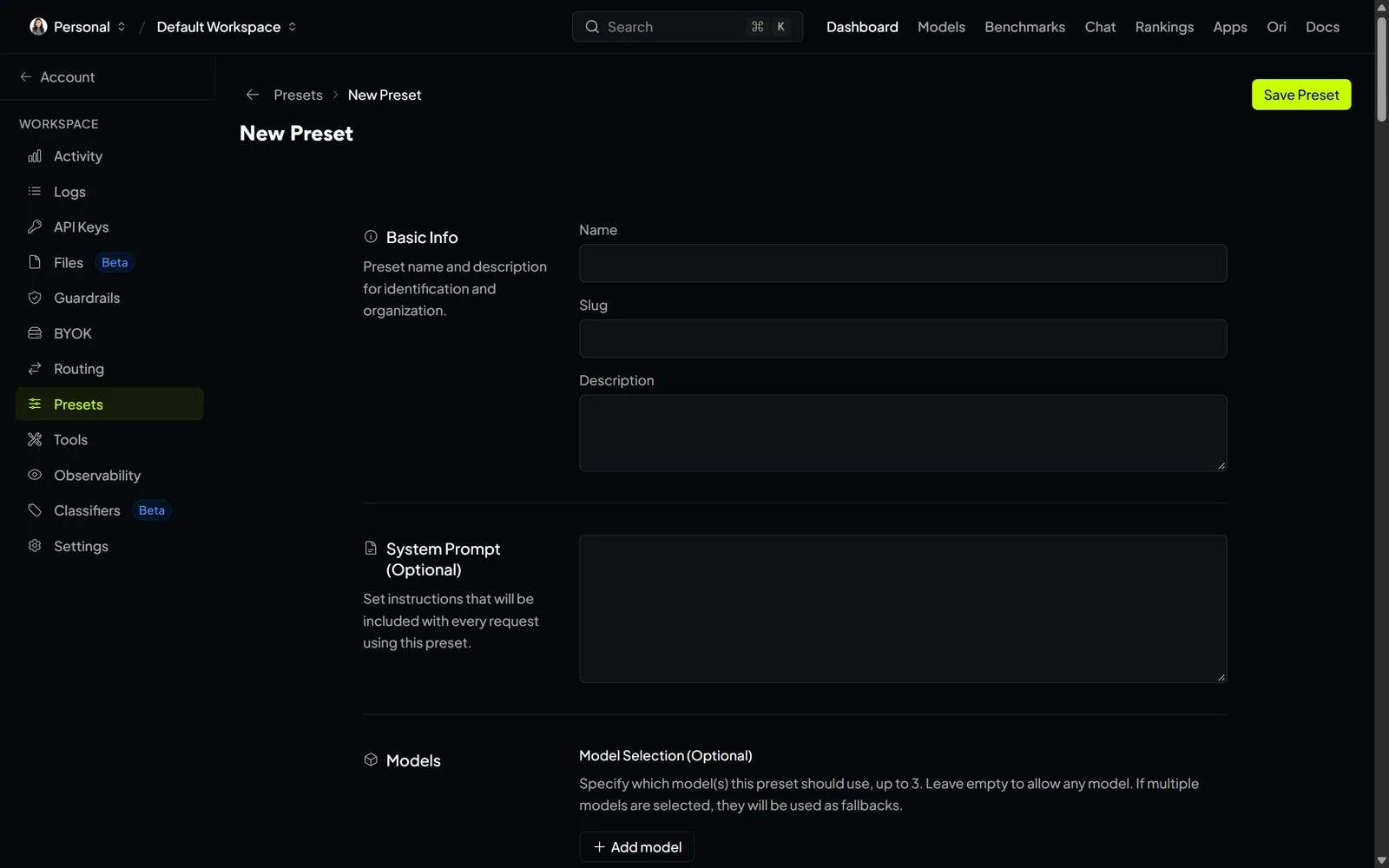
Presets. A preset saves a model, a system prompt and its settings under one name. In any connected app, you enter @preset/your-preset-name instead of a model. When a cheaper or better model shows up, you change the preset once and every app follows. No rebuild. I'd start with three, and the setup card shows which.
Bring your own key. Already pay a provider directly? Plug that key into OpenRouter. The first $25,000 of usage a month through your own keys carries no OpenRouter fee.
Auto Router. Set the model to openrouter/auto and it picks one for each prompt, with a cost tier you control. There's no extra fee.
Take your memory with you. Claude now lets you export your memory to other AI providers. Do it once, so you know where your context lives.
What changed since February
If you read the first version of this guide, here's what's different:
:onlineis deprecated. Web search is now a tool the model calls when it needs it. Exa searches cost $0.007 each, on top of tokens.- The Auto Router was rebuilt in August. It now routes on what OpenRouter users actually pay for, by task type.
- Credits can expire 365 days after purchase. Not after a year of inactivity. Buy what you'll use.
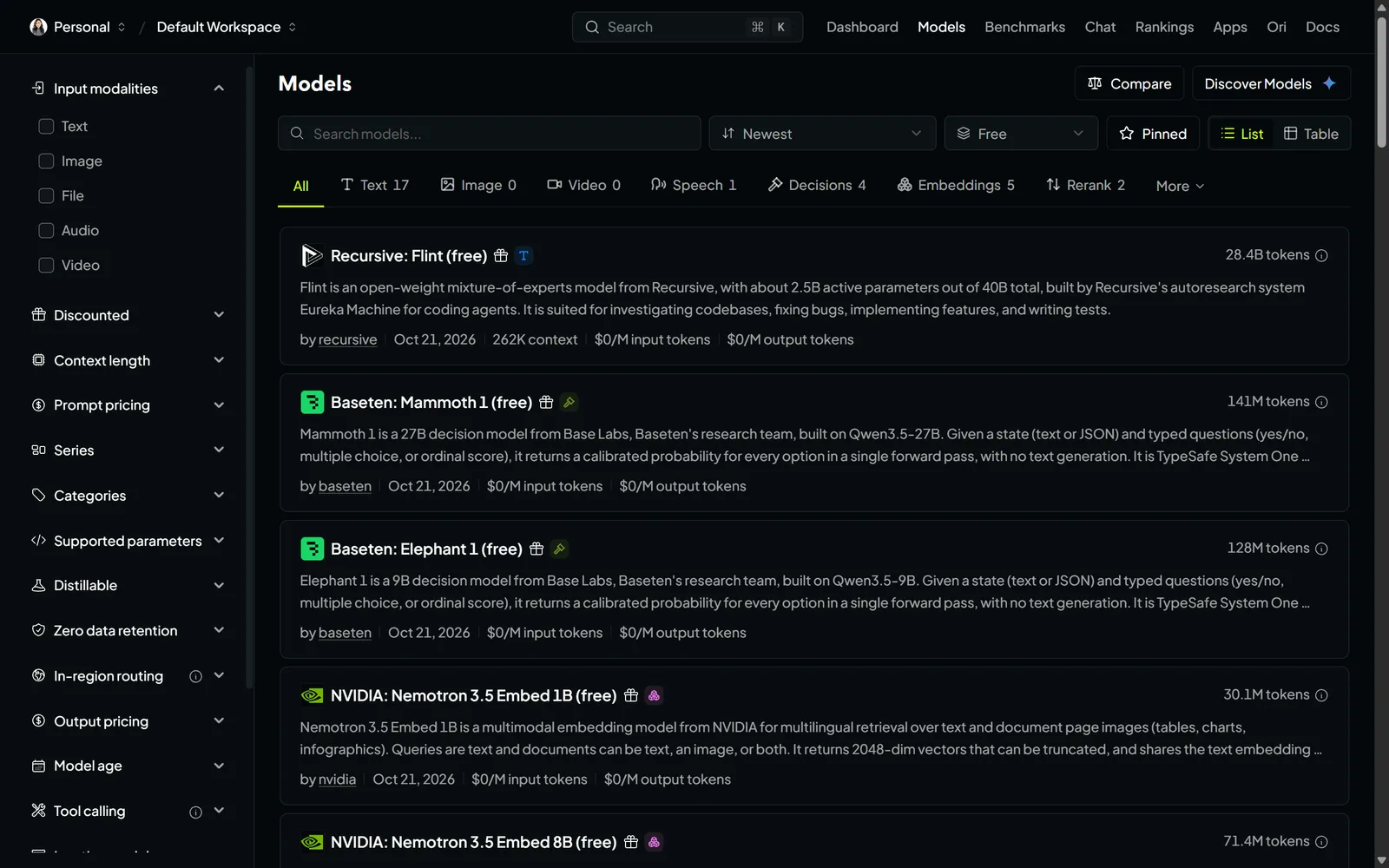
- The free models rotated. All five free models the February guide named are gone. Gemma 4 and Nemotron 3 have free versions today.
- BYOK terms changed to the $25,000-a-month allowance above.
- A Business plan arrived at 8%, for teams that need workspaces and regional routing.
Watch-outs
- Free can fall through to paid. A free model listed in a fallback chain can roll over to a billed model. Check your settings.
- Chat history stays on your device. OpenRouter's chat doesn't sync across devices, so export anything you need.
- Failed answers are free, extras aren't. You don't pay for an empty response, but a web search that already ran can still be billed.
- Check the data policy before you send client data. OpenRouter says it works with providers to keep prompts out of logging and training where possible, and you can require zero-data-retention providers. That setting doesn't cover tools like web search.
Get the OpenRouter setup card
The one-page clickable setup card: the 10-minute setup in four steps, the price of 1,000 typical tasks across eight open and closed models, the three starter presets and a checklist for your first 30 minutes, built to keep open next to OpenRouter.
FAQ
What does OpenRouter cost?
Are open models good enough for marketing work?
What is a preset, and why does it matter?
Do credits expire?
Is my data private?
Keep reading
The Marketer's Guide to AI Model Routing
The cost ladder and the two-question test for picking the right model every time.
The Intern Test: 10 Things to Delegate to Your AI Agent
Ten jobs to hand to your AI agent, from beginner to advanced.
A Beginner's Guide to AI Agents for Marketers
What an AI agent is and which one to start with.
Who's behind this? Alec Newcomb, Founder of MarketingAlec and ScaledOn, runs Claude, OpenAI and OpenRouter every day.
Meet Alec →